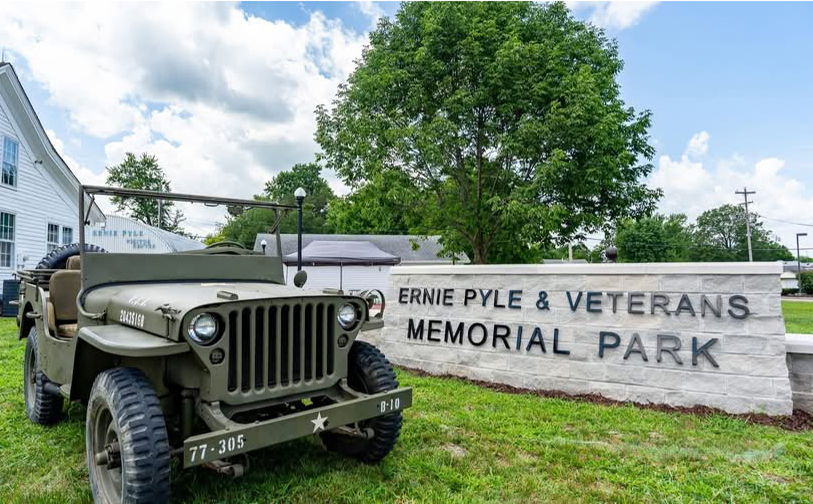
Indiana Housing and Community Development Authority approves matching $50,000 grant for Ernie Pyle World War II Museum park project

The Indiana Housing and Community Development Authority has approved a matching grant of $50,000 to the Friends of Ernie Pyle for its development of the Ernie Pyle & Veterans Memorial Park.

The matching funds will come from the agency’s CreatINg Places grant program. Donations to the fundraising campaign can be made directly to Patronicity.com/erniepyle, or to the museum’s web page using the Become A Donor link.

The Friends of Ernie Pyle, owner and operator of the Ernie Pyle World War II Museum in Dana, Indiana, is undertaking a fundraising campaign to raise its share of the IHCDA grant program. When the local campaign meets its $50,000 goal, that will unlock the CreatINg Places grant match of $50,000. The FEP has 60 days to raise its share of the matching grant.

The funds will go toward further development of the Ernie Pyle & Veterans Memorial Park, which is located on the north side of the Ernie Pyle World War II Museum.

The site expansion project was launched in 2023. Estimated to cost about $1 million, the first phases of the project have been finished and include a beautifully designed plaza featuring a bronze sculpture of Pyle. ADA-accessible restrooms have also been completed and are open to visitors.

Future plans call for construction of a covered performance stage, an educational World War II Victory Garden, a brick-lined walkway with lighting on a grass lawn, a display of flags of all branches of the U.S. Armed Forces and improvements to the museum entry way.

The fund-raising campaign for this matching grant received a boost when the Wabash River Run organizers, led by state Rep. Tim Yocum, decided to donate its profits toward the project. The kayak & canoe race was delayed due to water levels on the Wabash River to this Saturday, Sept. 12. The race starts in Montezuma and ends in Clinton.

“We’re thrilled at the opportunity to receive $50,000 from the IHCDA and confident our supporters will give us the monetary support to reach our goal and qualify for the matching grant,” said Steve Key, president of the board of the Friends of Ernie Pyle. “We’re also extremely thankful for the support of the Wabash River Run, which will take us a long way toward our fund-raising goal.”

Pyle is a native Hoosier and renowned war correspondent who won a Pulitzer Prize for his coverage of World War II in Europe and the South Pacific. He was born and raised near the small Vermillion County town of Dana. His birth home is an integral part of the museum complex. He was struck and killed by a Japanese machine-gunner’s bullet in the waning days of the war on the island of Ie Shima near Okinawa.

He also was a successful advocate for “fight pay” for members of the armed services in World War II. Congress passed the “Ernie Pyle Bill” in 1944 to increase the pay for servicemen and women in combat zones by 50 percent. That policy has continued from then to the present so Pyle will be forever tied to the veterans of the United States.

The Ernie Pyle World War II Museum features exhibits highlighting the Pulitzer Prize-winning journalist’s life and the war and soldiers he covered as a correspondent. The museum includes the farmhouse where Pyle was born and Quonset huts showcasing memorabilia, films and educational material related to WWII military history, veterans, soldiers, journalism and the daily life of “The Greatest Generation.” 

Proceeds from Sept. 12 Wabash River Run to benefit Ernie Pyle & Veterans Memorial Park

NOTE: Due to recent flooding in the area, this event has been rescheduled from Aug. 29 to Sept. 12.
• Join us 10 a.m.-5 p.m., Saturday, Sept. 12, for the Indiana Wabash River Run — an annual canoe, kayak and paddleboard race
• Proceeds support the Ernie Pyle & Veterans Memorial Park
• The route is 11 miles from the Montezuma Boat Dock to the Clinton Boat Dock
• The fee is $30 and includes a free t-shirt.
• To register, visit mikes.com/wrr/
• For more information, contact Tim Yocum, 812.208.2922 or Brenda Furry, 217-497-0941 or email crosscurrentra@gmail.com

Memory of Captain Waskow lives on in hometown

Texas town honors subject of Ernie Pyle’s famous column

By Andy Chandler

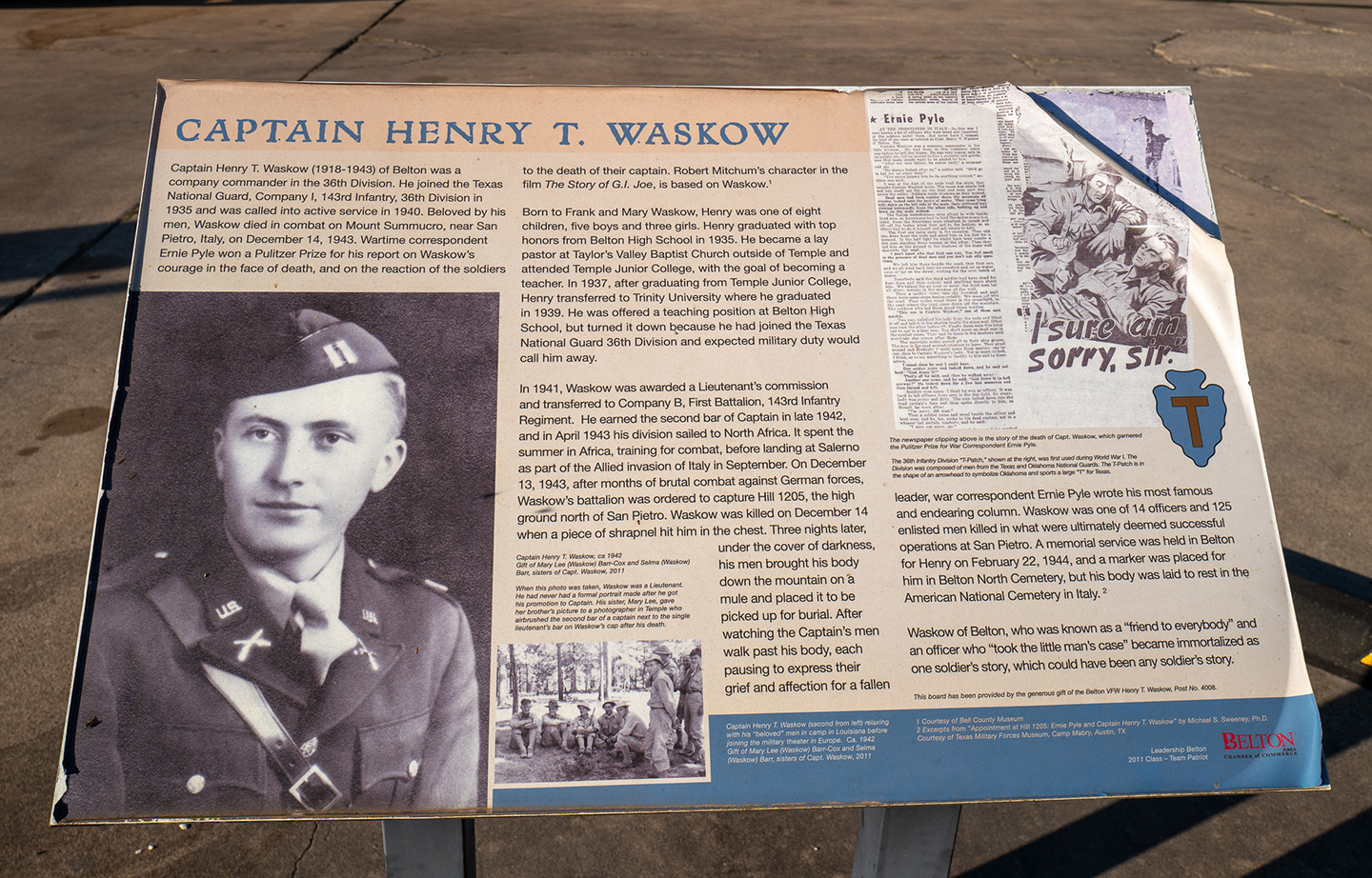
Belton, Texas — During a recent trip to Texas for vacation, I found myself only a half an hour outside of Belton. Belton, is the hometown of Captain Henry T. Waskow, the subject of Ernie Pyle’s famous column “The Death of Captain Waskow.”

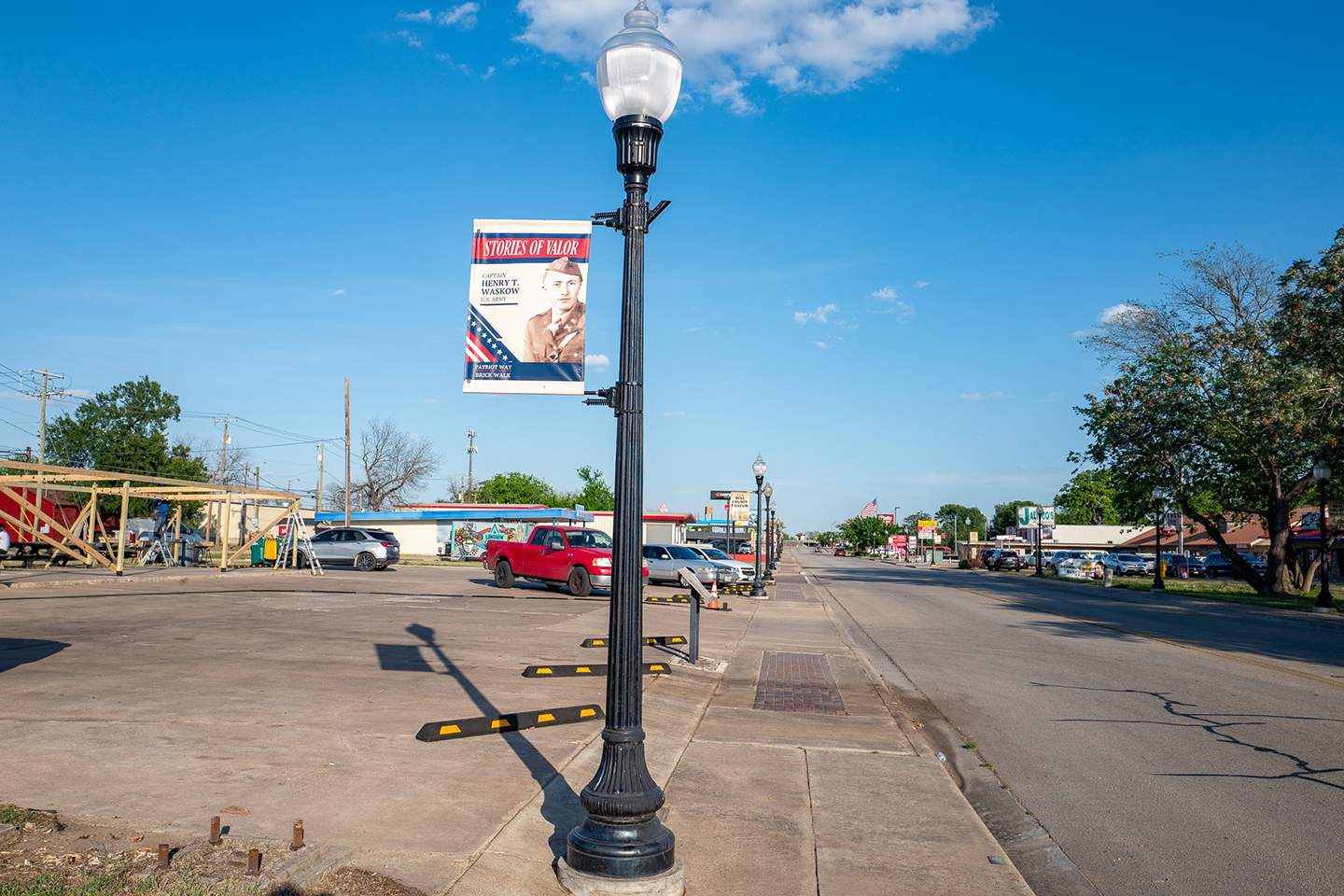
Coming in off I35, within the first mile from the exit was a banner attached to a light pole with Captain Waskow’s photo on it. Parking my car nearby, I started walking down the sidewalk and finally realized that the banner was part of a brick walkway of heroes. I chuckled to myself that putting a walk of heroes next to a driveup barbecue place is the most Texas thing one can imagine. Next to the banner is a plaque with his story and by the plaque is the brick with his name on it. I was surprised to find out that the photo we used in the huts was taken when he was a 1st lieutenant and that his sister asked a local photographer to airbrush the 2nd bar to designate his rank as a captain.

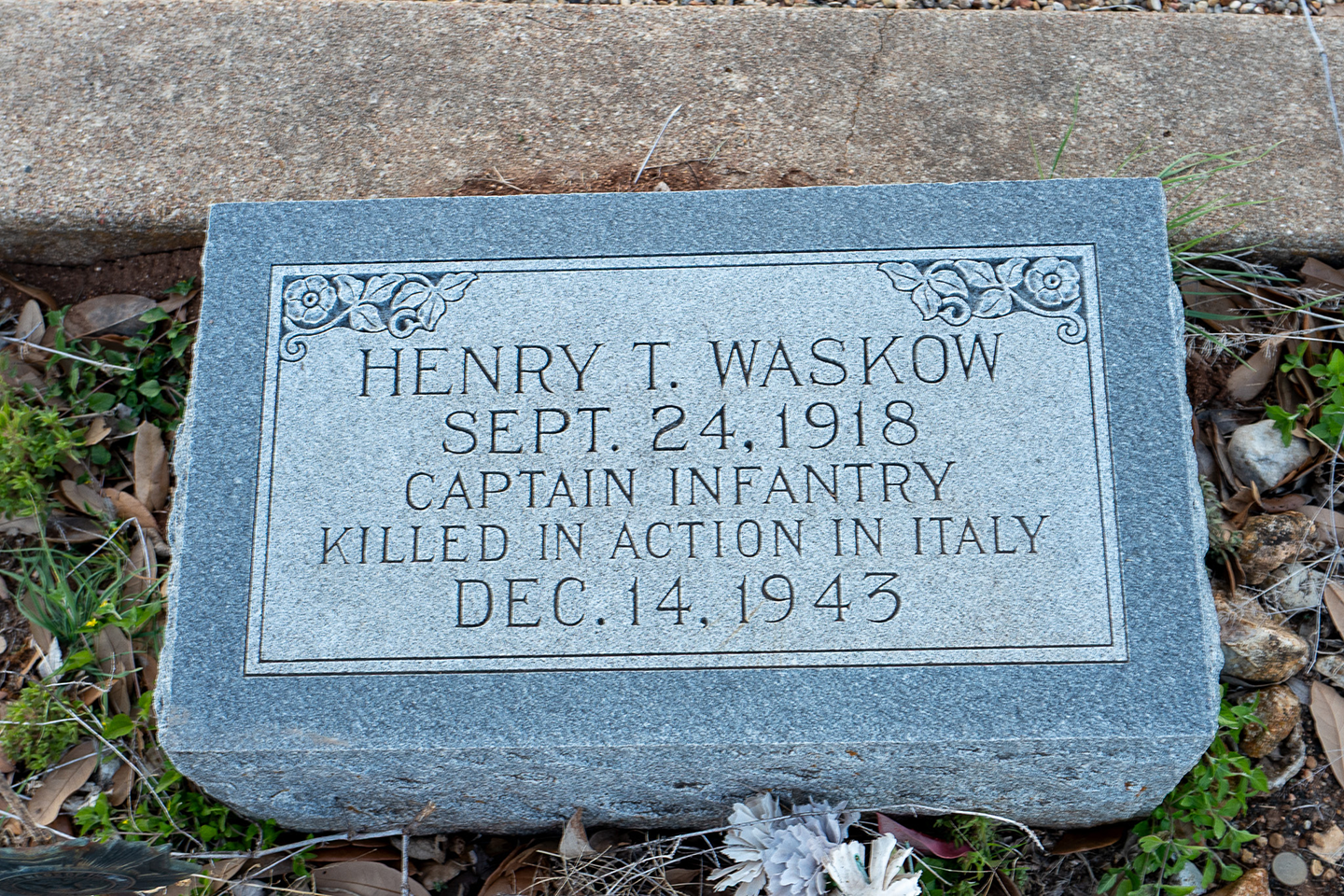
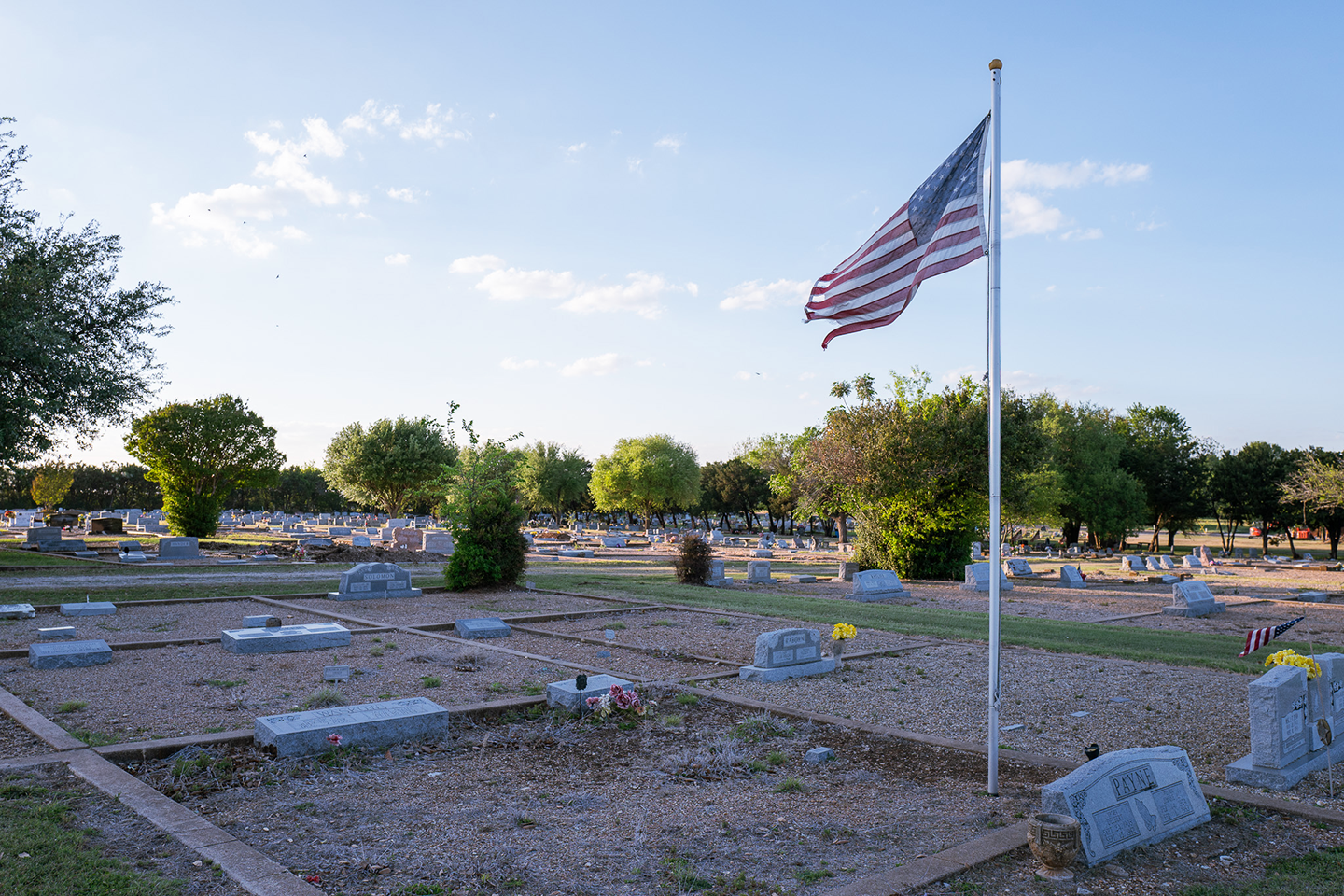
Driving to the North Belton Cemetery and finding his parents’ graves was rather difficult because the digital app FindAGrave didn’t pin drop the location and I had to download a copy of the cemetery map and guess my way around the cemetery using nearby graves and the correlating sections. Finally, I found it. It made so much sense that the Waskow plot would have a flagpole with an American flag.

There were two things I found remarkable about the gravesite. First, Captain Waskow has a cenotaph. Despite being buried at the Sicily-Rome American Cemetery in Italy, in Belton he has a cenotaph that people can come to and pay their respects. Secondly, heartbreakingly, Captain Waskow’s mother, Mary, passed away a few months after his death, adding a second tragedy to a family already reeling from the first.

Looking up at the flag, I realized it was in bad shape. I also noticed that there was a store around the corner that sold flags. I purchased one, and in the fading daylight, switched them. While I should probably retire the old flag, I can’t part with it, and it’s in the museum hanging behind my desk. At the museum, we honor Pyle’s legacy, and Pyle honored Captain Waskow.

Read Ernie Pyle’s column, “The Death of Captain Waskow” here.

Andy Chandler is history columnist at the Paper of Montgomery County. He is also the archivist at the Ernie Pyle WWII Museum in Dana and at Candles Holocaust Museum in Terre Haute.

Indiana State Museum loans iconic artifacts to Ernie Pyle World War II Museum

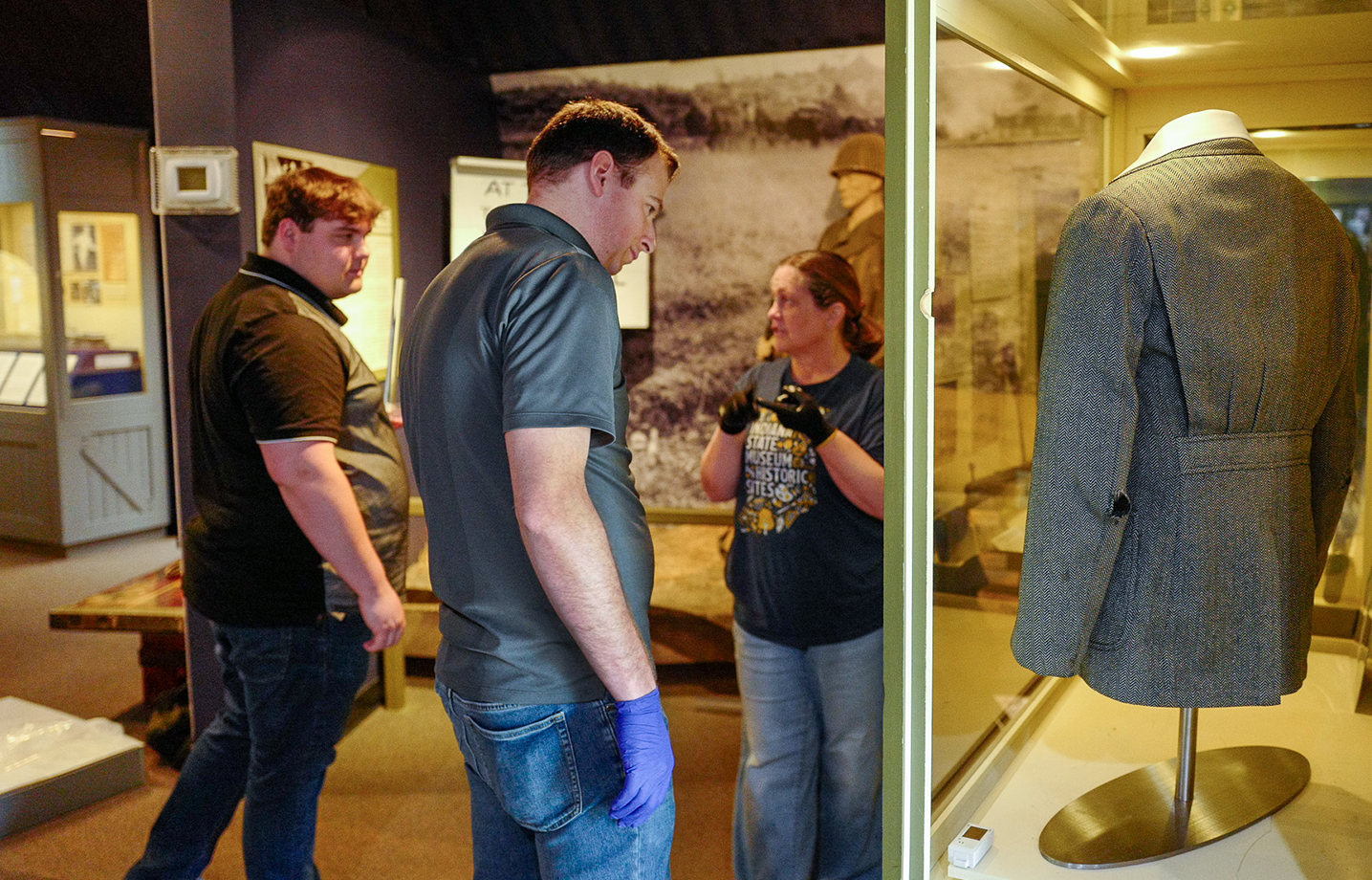
The tweed sports coat that Ernie Pyle wore to the White House to visit Eleanor Roosevelt is on display at the Ernie Pyle World War II Museum in Dana.

The coat belonging to the preeminent World War II correspondent is one of several iconic artifacts on loan from the Indiana State Museum in Indianapolis. It marks the first loan agreement between the two museums.

“We are excited to receive these loans and want to thank Chief Curator Susannah Koerber and her team for working with us to make this happen,” said Steve Key, board president of the Friends of Ernie Pyle, who operate the museum in Dana. “I’d also like to thank state Rep. Tim Yocum for initiating the conversation between the two museums that led to this loan.”

The gray coat’s sleeves notably have visible holes in both elbows, but it was the only coat Pyle had with him when Mrs. Roosevelt’s private secretary Malvina Thompson called him with the First Lady’s invite for tea in November of 1943. Pyle shared his experience with his readers in a column headlined: “Ernie Pyle Has Tea With The First Lady.”

In addition to the sports coat, visitors to the Ernie Pyle World War II Museum can see the blue wool Navy training cap he wore at the end of World War I and the permit for the war reporter to leave the United States and remain overseas for one year, beginning Jan. 1, 1945. The permit includes Pyle’s height and weight.

The objects will be on view in the Ernie Pyle World War II Museum through November of this year. The artifacts on loan from the Indiana State Museum join other items housed in the Dana museum and diorama exhibits illustrating some of Ernie Pyle’s wartime columns. The museum also features the farmhouse where Ernie Pyle was born in 1900.

The museum in Dana is open on Fridays and Saturdays from 10 a.m. to 5 p.m. and Sundays from noon to 5 p.m. Admission is free. Special tours can be arranged on other days. To request such a tour, call 765-665-3633 or email director@erniepyle.org. 

Caption: From Left: Ernie Pyle WWII Museum intern Mikane Didier talks with Kevin Whaley and Katie Barbour from the Indiana State Museum. Whaley and Barbour installed a tweed jacket belonging to Ernie Pyle in a display case at the museum named for the famous WWII journalist in Dana, Indiana. The jacket is one of the items on loan from the Indiana State Museum through November. Photo by Andy Chandler.

About the Ernie Pyle World War II Museum

The Ernie Pyle World War II Museum features exhibits highlighting the Pulitzer Prize-winning journalist’s life and the war and soldiers he covered as a correspondent. The museum includes the farmhouse where Pyle was born and Quonset huts showcasing memorabilia, films and educational material related to WWII military history, veterans, soldiers, journalism and the daily life of “The Greatest Generation.” For more information about the Ernie Pyle World II Museum, visit the museum’s website at erniepyle.org.
About the Indiana State Museum and Historic Sites

The Indiana State Museum and Historic Sites is a museum system with 12 one-of-a-kind locations across the state that ignite wonder, inspire curiosity, reveal stories and create connections. The museum, located in White River State Park in downtown Indianapolis, serves as a central hub offering immersive experiences for visitors of every age and interest — from art and architecture, to history and culture, to science and nature. The historic sites stretch north to the shores of Sylvan Lake, south to the banks of the Ohio River and many places in between. Learn more at IndianaMuseum.org.

$250,000 for 250 years: As nation’s birthday approaches, FEP launches fund drive

The Friends of Ernie of Pyle Development Fund is launching a fundraising campaign in observance of our nation’s 250th birthday to help advance the continued expansion of the Ernie Pyle & Veterans Memorial Park.

Titled the “$250,000 for 250 Years” fund drive, the campaign strives to raise $250,000 during 2026 as part of the United States’ birthday celebration.

To reach its goal, the Friends of Ernie Pyle invites individuals and/or families, as well as businesses and organizations, to donate in honor of the 250 years since the British colonies in North America declared independence from the British Crown in 1776, forming the United States of America.

Steve Key, president of the board of the Friends of Ernie Pyle, said if an average of $250 could be received from 1,000 donors, the organization would reach its goal and direct the funds toward completion of the $1.2 million park now under construction in Dana just north of the renowned war correspondent’s birth home and Quonset huts that serve as the Ernie Pyle World War II Museum.

The site expansion was launched in 2023. More than $500,000 has already been collected and invested in the project, which incudes a beautifully designed plaza featuring a sculpture of Pyle created by Clinton artist Bill Wolfe and unveiled last fall. ADA-accessible restrooms have also been completed and will be open for visitors this season.

Future plans call for construction of a covered performance stage, an educational World War II Victory Garden, a presentation of flags of all branches of the military, a brick-lined walkway with lighting on a grass lawn and improvements to the museum entry area.

Key encourages potential donors to contribute whatever they can to the project. “If $250 is too great an ask, don’t worry. You can contribute any amount you would like toward the project. The more people are involved, the better. And it’s also OK to contribute more than $250.”

To donate, send donations to P.O. Box 345, Dana, IN 47847, payable to The Ernie Pyle WWII museum. Or go to the website at erniepyle.org and click on the link Become a Donor. Donors may also scan the QR code on this page to make a donation here.

The Ernie Pyle World War II Museum opened early this year — March 19 — and will remain open every weekend until Veterans Day on Nov. 11. Admission is free. Visitors will be encouraged to walk the grounds and view the expanded features already completed, including the Pyle sculpture.

The museum is open every Friday and Saturday, 10 a.m. to 5 p.m., and Sunday, noon to 5 p.m.

The Ernie Pyle World War II Museum is owned and operated by the Friends of Pyle, a nonprofit organization dedicated to preserving and advancing Pyle’s legacy and honoring the service of all veterans of the U.S. Armed Forces.

Ceremony commemorates 81st anniversary of Ernie Pyle’s death

The Friends of Ernie Pyle conducted a Remembrance Ceremony on April 18 at the Ernie Pyle Rest Park on U.S. 36 just east of Dana.

Melanie Kashon, 2025 Queen of the Ernie Pyle Firemen’s Festival, placed a wreath at the memorial, an exact replica of the one on Ie Shima, where Pyle was killed by Japanese machine gun fire 81 years ago.

Andy Chandler, archivist at the Ernie Pyle World War II Museum in Dana, delivered the keynote address at the ceremony. Members of the North Vermillion High School Notables sang the National Anthem. Holden Rankin of the North Vermillion band played Taps.

Veterans from local organizations were on hand to present the colors.

Upcoming museum events: May-July 2026

All times EST; all locations in Dana, Indiana. For more information and updates, visit our Facebook page and check back here, erniepyle.org.

• Sunday, May 17: Second annual Rosie the Riveter celebration

Come celebrate women who paved the way for our generation and future generations 3 p.m., Helt Twp Firehouse, 160 N. Maple St.

  • Speaker: Nina Alexander

  • Female veterans will be honored by Old Glory Quilters

  • “Rosie awards’ will be given! See below

  • Refreshments to enjoy

Rosie Awards-Celebrating the women who helped win WWIl and women making a difterence today!

• Someone who served in the military during WWII. If none in attendance, then a direct descendant of a WWII WASP (Women Air Force Service Pilots), WAC (Women’s Army Corps), WAVES (Women Accepted for Volunteer Emergency Service)

• Someone who worked on the Homefront during WWII-Victory Gardens, etc.

• Someone who worked as a ‘Rosie’ during WWII. If none in attendance, then a direct descendant of a ‘Rosie’.

• Mothers with children serving in the U.S. Military-past and/or presently

• Mothers with children serving on the Homefront as first responders (police, firefighter, EMT/paramedic

• Sunday, June 14: Flag Day

Join us 1-3 p.m., at the museum, 120 Briarwood Ave., for a free ice cream social as we commemorate Flag Day which recognizes the adoption of the US flag on June 14, 1777. 

• Saturday, July 18, 2nd annual Jeep Show

Join us 10 a.m.-3 p.m.

• Veterans recognized 11 a.m.

• Prizes awarded 2 p.m., 

• Check In begins at 8:30 a.m. Pre-registration-$20; Day of $25

• Dash plaques for first 100 Jeeps registered

• Truck/trailer parking available

+ Vendor Show & Food Available

MILITARY CLASSES

WWII Era

Korean War Era

Vietnam War Era

Hummer/Modern Day

JEEP CLASSES

Best Flat Fender

Best CJ

Best YJ

Best TJ

Best JK

Best JL

Best JT

Open Class

More details soon.

One of Ernie Pyle’s first assignments was covering the Klan: ‘They found out who the reporter was that got the dope …’

Note: This story by the late Ernie Pyle historian Owen Johnson was originally published in the Winter 2020 Friends of Ernie Pyle newsletter.

Partially in response to a tweet by an Indiana University student this spring that Ernie Pyle must have held racist views, I have been looking at the historical evidence to ascertain Pyle’s thinking about Black people as expressed in his columns, or at details of his life that might help us draw some conclusions. Part of the story takes place in Indiana.

For complicated reasons — a falling out with a journalism professor and a failing romance — Pyle left Indiana University in January 1923, a semester short of graduation. to take a position at the La Porte Herald in northern Indiana.

* * *

Pyle arrived in La Porte in late January 1923 to join a five-member staff, all of them college-educated, a rarity for the time. He took up residence in the YMCA and reported to the Herald, which assigned him to a “City Beat,” including the court house, the fire and police departments, City Hall and a few other departments, just about the time the Ku Klux Klan was trying to organize in town. Right when he arrived the Klan mailed out invitations to some residents of the city:

As a red blooded, 100 per cent American (which your friends state you are) you will be given an opportunity to hear the REAL TRUTH about the GREATEST MOVEMENT of all time in the history of our Glorious country, at an Admission by THIS CARD ONLY. DISCUSS THIS WITH NO ONE.

Ray E. Smith, the City Editor, apparently came into possession of one of the invitations and assigned Pyle to report on the meeting. Because Pyle was such a newbie, he wasn’t recognized as he took notes and collected quotations from the Klan organizers.

Perhaps unbeknownst to him, Pyle had allies. The meeting took place in Richter Hall, above the offices of the La Porte Gas and Electric Co. Several cars parked in front of the building with their headlights shining on the entrance to deter people from attending. A crowd also gathered to demonstrate their opposition to the Klan and scare people away. One car of would-be Klansmen decided not to stop when it saw the gauntlet. Twenty-two men walked up the stairs to the meeting room, but eight were turned away. One report had it that only six of the remaining 14 were potential recruits, the others already being members of the Klan. Five cars of Klansmen showed up in cars with licenses from Elkhart, South Bend and Michigan City.

Pyle “loitered in the . . . hallways long enough to catch the drift of the Klan’s grand-opening plans” presented by C. E. Weller of Kokomo. “A few local merchants and residents who attended the meeting that day, hoping to avoid recognition, were somewhat shocked the next day to read an account of the meeting in The Herald.”

After the meeting, several men followed Pyle back to his room in the Y. When he told them that he was on assignment for the Herald they warned him not to publish anything. Pyle refused, perhaps because he knew he had the support of his editor. His article appeared on the front page of the Jan. 31 edition.

“We revealed some of the things the Klan didn’t want known, which had a great bearing on their failure to get organized here,” Pyle boasted. “They found out who the reporter was that got the dope, and now all the ‘klanners’ are talking about it.”

Indiana was a center of Klan activity in the 1920s. Some 300,000 men, about a third of adult white males in the state, were members. Its members played important roles in the state’s politics during much of the decade, although the Klan never completely controlled the state. The police chief in Michigan City claimed that he was removed from his job because he refused to join the Klan; in fact, the organization disagreed with his principles.

The Klan primarily opposed Catholics and Jews, as the number of Blacks outside the larger towns and cities was small. The 1920 census listed only 127 “Negroes” among La Porte’s population of 15,158.

For a number of years, Indiana had “Sundown Towns,” where people of color were warned not to spend the night. Dana, Bloomington and La Porte were not included on Loewe’s website list of 240 sundown towns in Indiana.

Pyle’s courage in his reporting in La Porte might have reflected his upbringing:

“My mother is a devout Methodist and a prohibitionist. Yet she and my father voted for Al Smith in 1928, because they thought he was a better man than Hoover. Some of their neighbors wouldn’t speak to them for months because they voted for a Catholic and a wet. But they didn’t care. They are always doing things they think are right.” (Sept. 25, 1935 column)

Pyle and his family were ahead of the time in their thinking about race.

— Owen Johnson, historian, associate professor emeritus, Indiana University and author of “At Home with Ernie Pyle.” 

First Trivia Night fundraiser draws crowd, nets $2,202.50

The Friends of Ernie Pyle conducted its inaugural Trivia Night in February on behalf of the Ernie Pyle World War II Museum.

The event took place at the Carter’s Nest Bar in Dana and was well attended and a great success. A fun time was had by everyone.

Best of all, the event raised $2,202.50 for the Ernie Pyle and Veterans Memorial Park currently under construction.

A total of nine teams participated (52 total competitors ranging in age from mid-20s to “seasoned and experienced”) in the trivia competition hosted by Chris Wood.

The big winner was the OutKast team made up of Doug and Kiley Drake, Marilyn Davies, Ross Holbert, Billy Richardson and Jerry Richardson.

Ernie Pyle WWII Museum to open for 2026 on Thursday, March 19

The museum will open for the 2026 season on Thursday, March 19 with special programming March 19-22. 
Watch for updates on the museum’s Facebook group here and at erniepyle.org.
 
For hours and info on visiting the museum, click here; to arrange a special tour, click here.


JOIN ERNIE'S EMAIL LIST